
Strategic
Workshop
Oslo, 4 May 2026
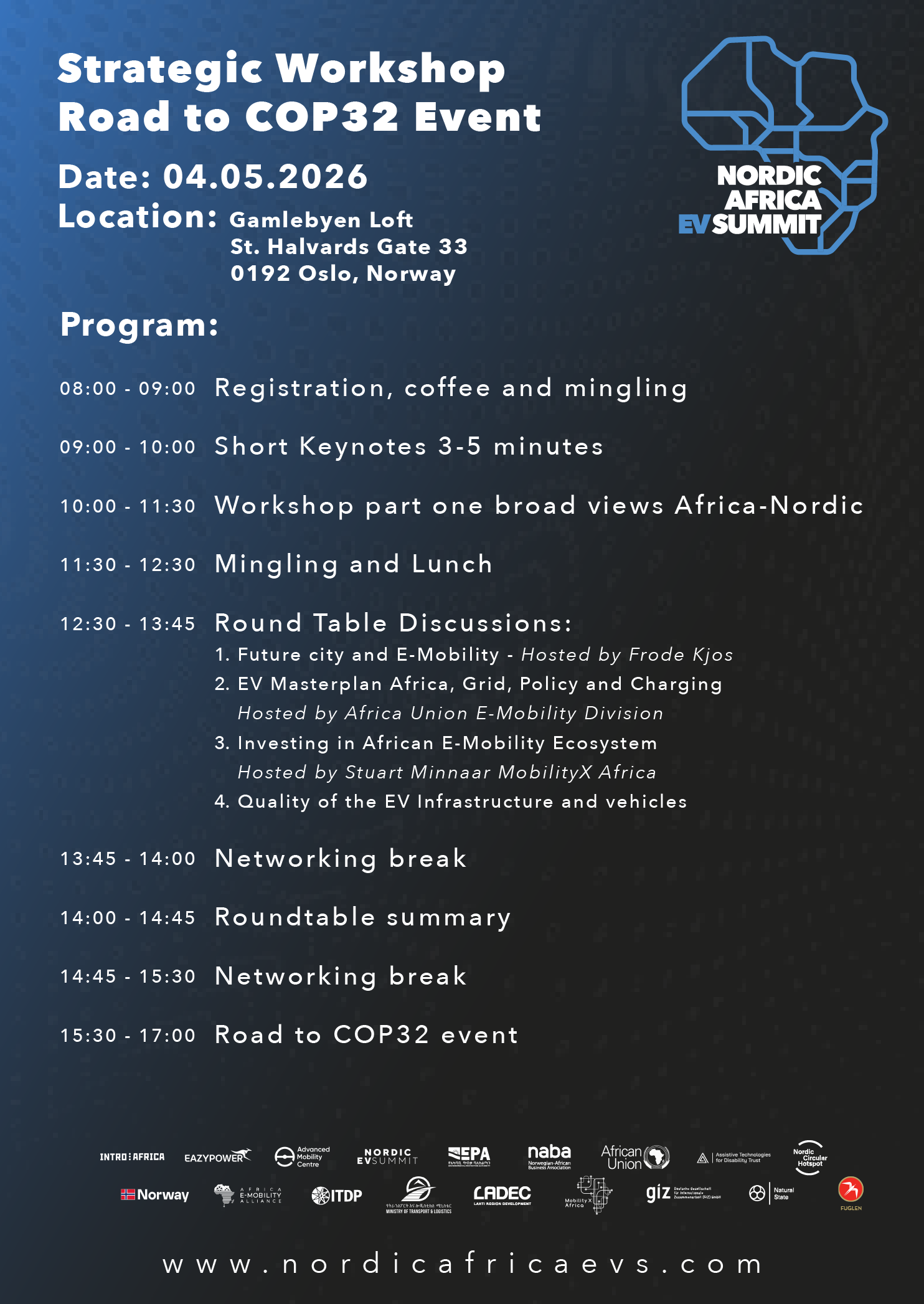
Strategic workshop | Oslo | 4 May
A Systems-Level Working Platform for Electric Mobility Deployment
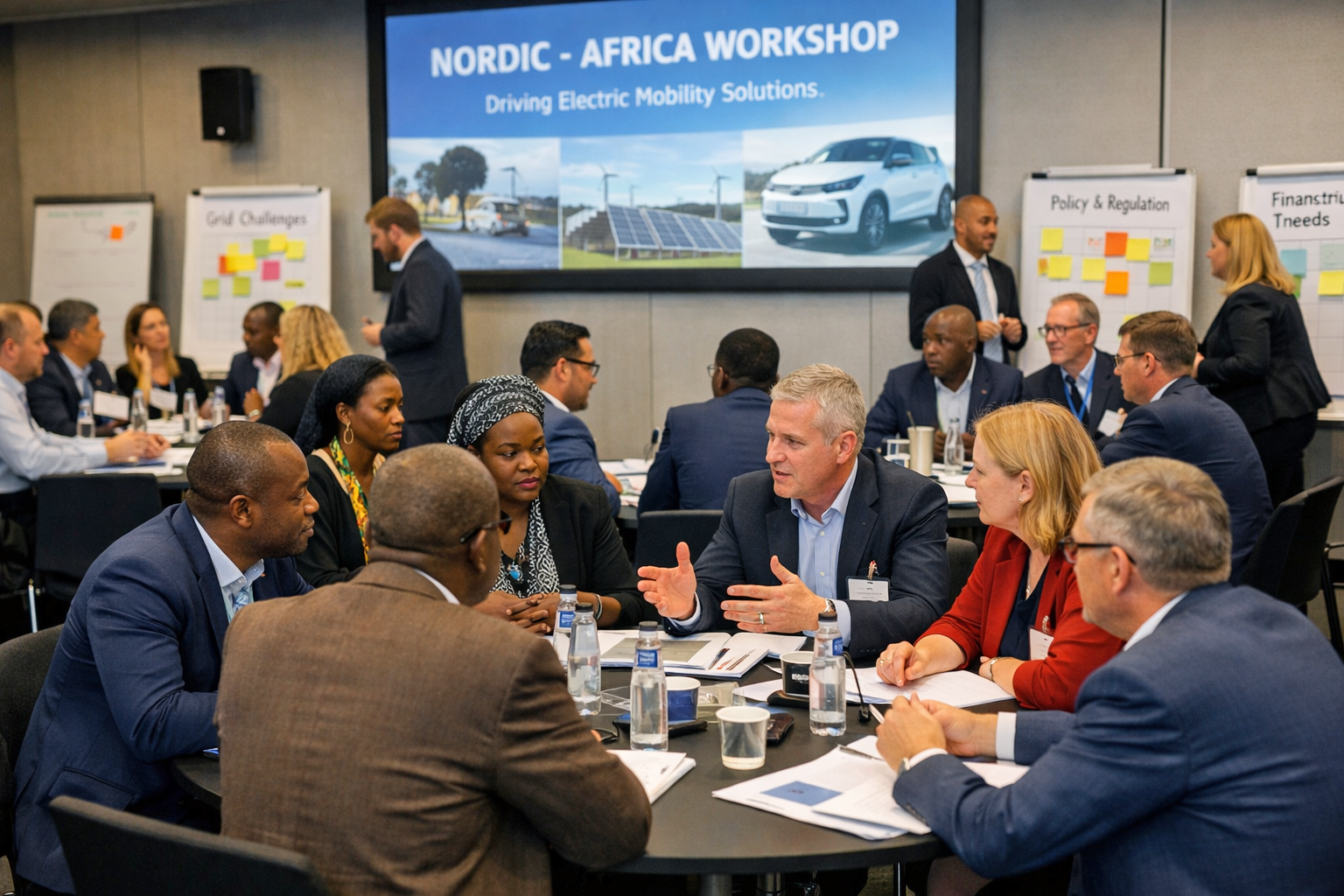
The Nordic–Africa Strategic Working Session convenes 30–50 African decision-makers and selected Nordic industry leaders, investors and institutions within a curated group of up to 100 participants.The session is structured to move beyond dialogue and identify concrete deployment pathways across Africa’s electric mobility ecosystem.
Purpose: Africa’s EV transition is entering a systems phase. The primary constraints are no longer vehicle availability, but: Grid readiness │Charging and storage integration│Regulatory frameworks│Financing structures│
Corridor and fleet coordination│Road safety and planning. This working session addresses these barriers directly.
Structure: Strategic Framing (Plenary) – Alignment on market realities and priority deployment themes..
Thematic Working Labs (Breakouts) – Focus areas include: Heavy-duty & fleet electrification│Charging & battery energy storage systems │Grid integration │Enabling policy & standards│Investment architecture
Each lab delivers:
Defined structural barriers│Solution categories with Nordic relevance│Identified collaboration and pilot opportunities
Consolidated Output
A prioritised challenge–solution framework to guide engagement at the Nordic EV Summit and toward Addis Ababa 2026. Deliberate networking intervals are embedded to enable bilateral engagement and early-stage partnership formation.
Before the session, participating organisations will be mapped according to market maturity, capital capacity, technology capability and deployment readiness. This structured profiling forms the basis for pre-scheduled 1–1 meetings, ensuring that priority dialogues are initiated in Oslo.
Outcome
A structured deployment map linking African system needs with Nordic capability and capital, forming the analytical foundation for structured engagement toward Addis Ababa 2026.
THEMATICS
Unconstrained Charging
Heavy-Duty Electrification
Policy Enabler

Grid Readiness
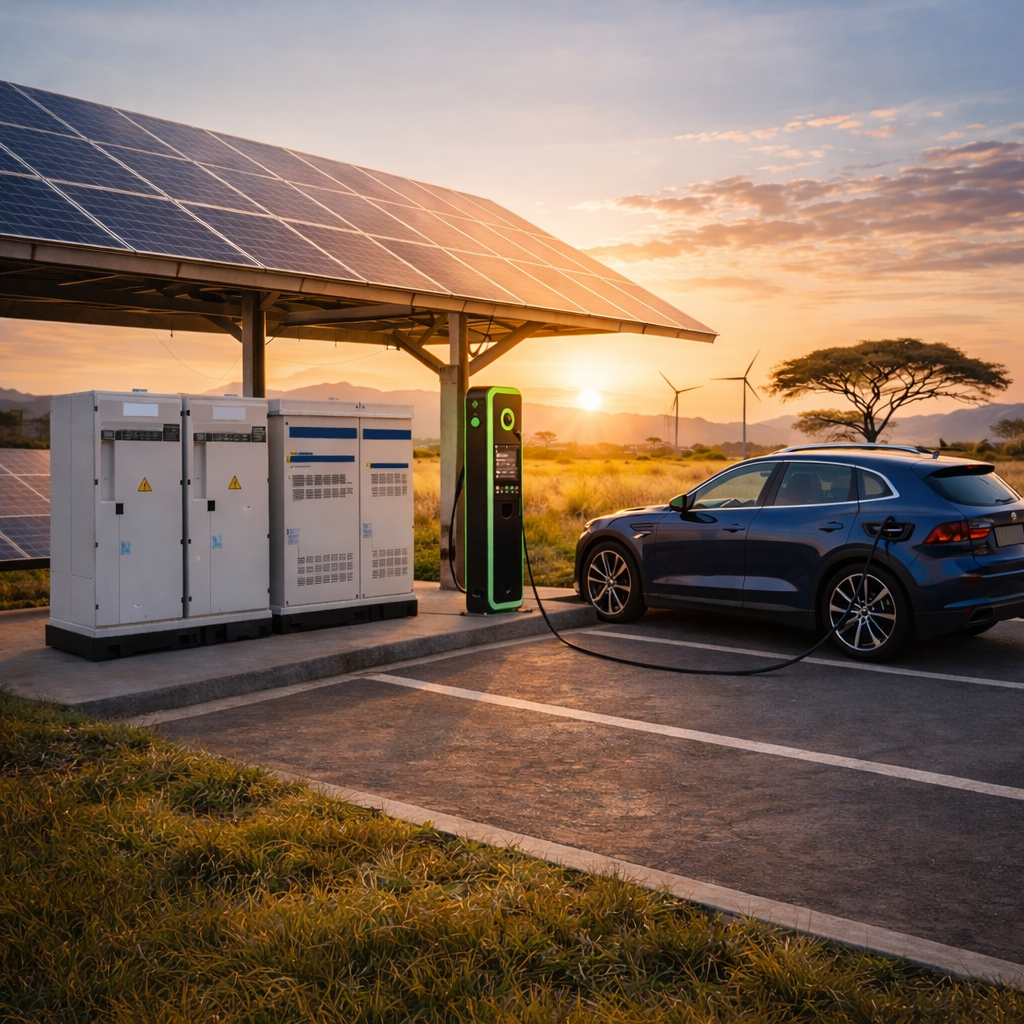
In many African markets, charging demand will outpace grid upgrades. This pillar looks at how storage-backed charging infrastructure and BESS enable high-power, reliable charging without waiting for grid expansion, and how Nordic technologies and financing structures can accelerate rollout for fleets and corridors.
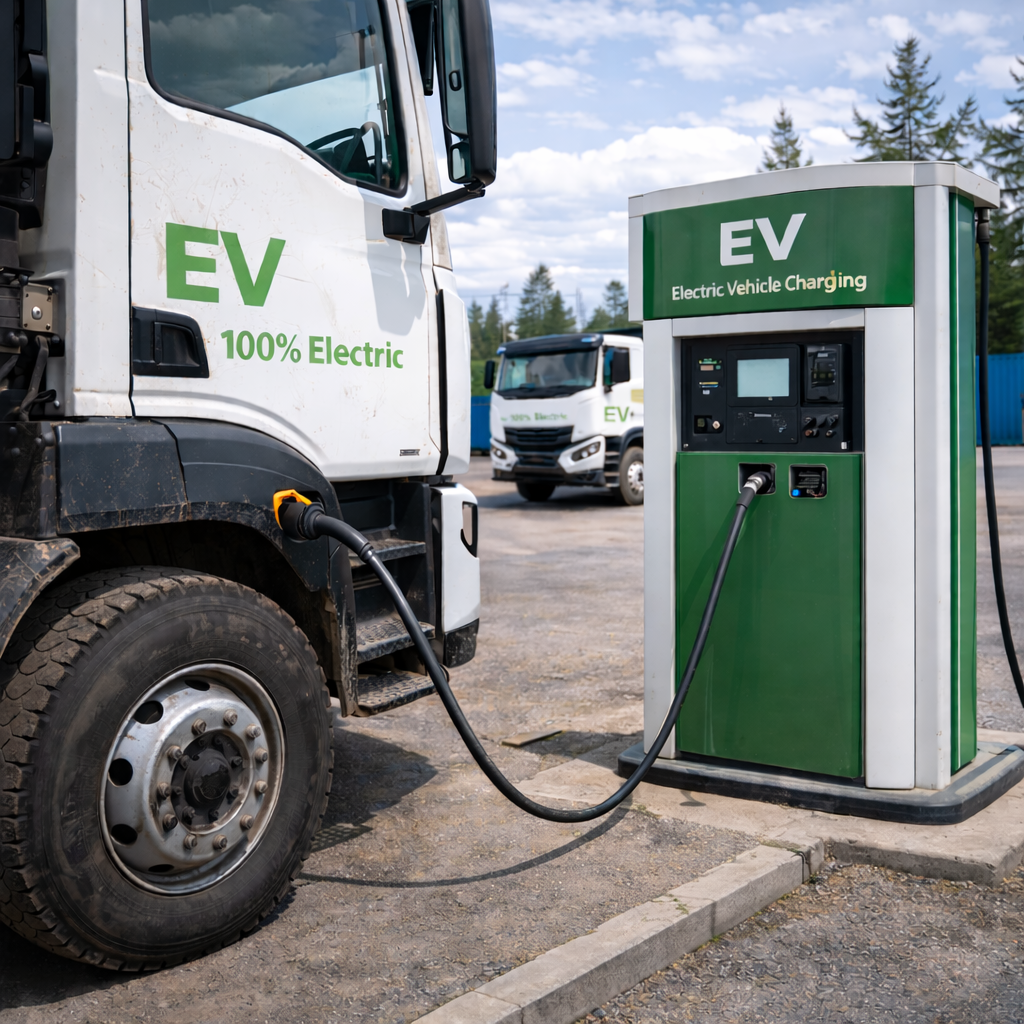
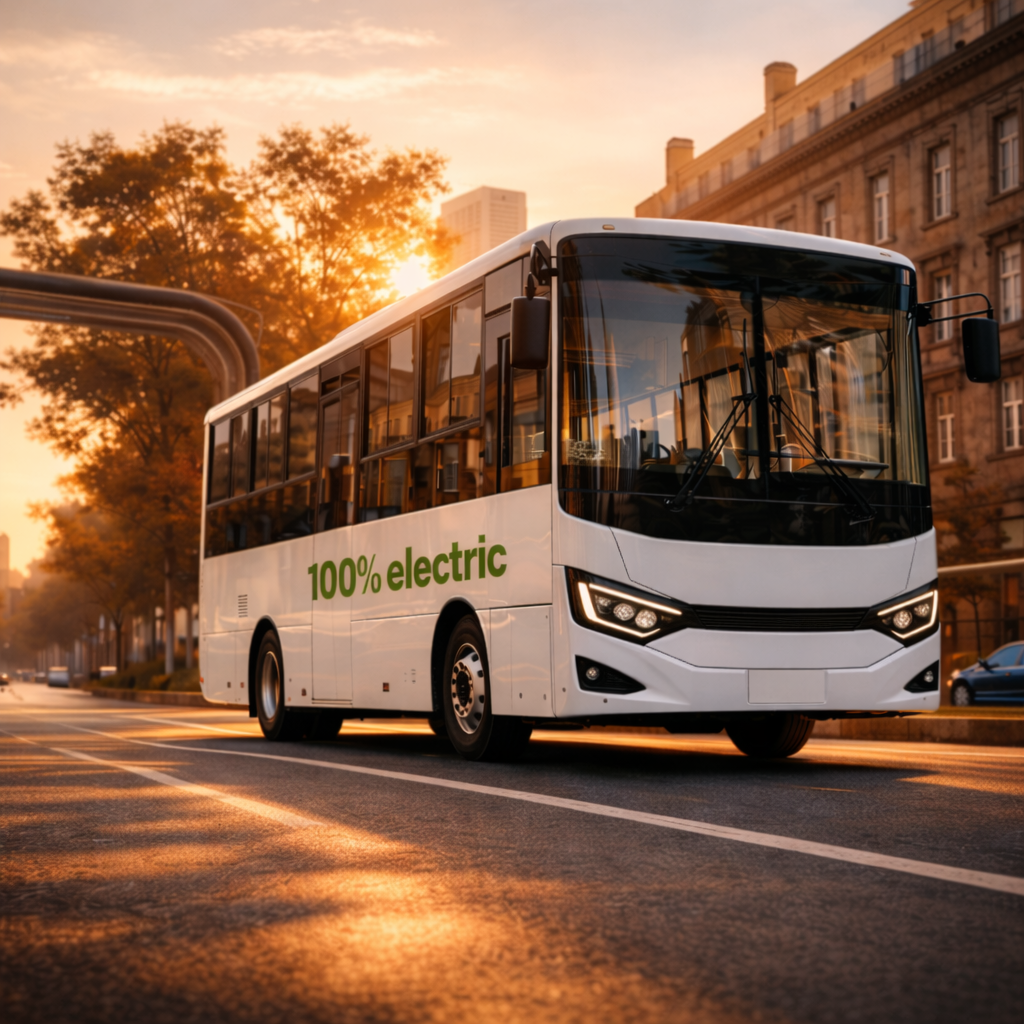
Electrifying buses, commercial fleets and transport corridors offers Africa the fastest route to scale and impact. This pillar focuses on heavy-duty deployment models, showcasing how Nordic vehicle platforms, charging solutions and operational expertise can support reliable, high-utilisation transport systems across cities and regions.
The focus is on the regulatory, public transport and market structures that shape investment decisions, highlighting how Nordic experience in regulation, public procurement and public–private partnership models can support African governments and cities in creating predictable, investable conditions for long-term electrification.
Africa’s electric mobility rollout will be limited by grid capacity unless power systems evolve in parallel. This pillar examines how grid planning, renewable integration and system resilience can enable EV deployment at scale, drawing on Nordic experience in building robust, flexible power systems suited for long-term growth.