
Bringing Africa to
the leading European EV Summit
Oslo, 4-7 May 2026

Oslo PrograM | 4 – 7 May
Monday 4 May
Nordic–Africa Strategic Workshop & ROAD to COP32
Location
Gamlebyen Loft - St. Halvards Gate 33, 0192 Oslo, Norway
08:00 - 09:00
Registration coffee and mingling
09:00 - 10:00
Short Keynotes 3-5 minutes
10:00 - 11:30
Workshop part one broad views Africa - Nordic
11:30 - 12:30
Mingling and Lunch
12:30 - 13:45
Round tables
Future city and E-Mobility
Hosted by Frode KjosCharging Masterplan Africa
Hosted by Africa Union E-Mobility DivisionInvesting in African E-Mobility Ecosystem
Hosted by Stuart Minnaar MobilityX AfricaQuality of the EV Infrastructure and vehicles
13:45 - 14:00
Networking break
14:00 -14:45
Roundtable summary
14:45 - 15:30
Networking break
15:30 - 17:00
Road to COP32 event
In collaboration with GIZ and NABA
TUESDAY 5 May
Norwegian EV Industry Tour
A curated full-day tour of Norway’s world-leading EV ecosystem, where 97% of new car sales are fully electric.
Delegates experience first-hand large-scale charging networks, public–private cooperation models, grid integration, fleet electrification solutions, and innovation environments that enabled mass adoption. The focus is on transferable system lessons for African markets.
Optional Nordic EV Summit pre-launch event in the evening.
08:00
Pick up central Oslo
09:00 - 11:00
Public transport future testbed
11:00 - 12:30
Heavy Duty Electric Transport Solutions
12:30 - 13:30
Mingling and Lunch
12:30 -15:00
City of Oslo EV Transformation
15:00 - 16:00
Rounding up the industry tour
18:30
Nordic EV Summit welcoming reception

Wednesday 6 May
Nordic EV SUMMIT Day 1 *
09:00 - 10:00
Registration, coffee & Networking
10:00 - 10:45
Opening session: New world order
Christina Bu, Ola Rosling, Mattias Goldmann
10:45 - 11:00
Ethiopia’s bold electric leap
H.E. Bareo Hassen
11:30 - 12:15
Are we facing Carmageddon?
Ken Maeda, Julia Poliscanova, Raed Kadri
Moderator: Roger Atkins
12:15 - 14:00
Networking Break
13:15 - 14:00
Charging investments in emerging markets
Focus on Africa and Latin America
Berit Lid Scharff, Eugenio Grandio, Bent Vistisen, Hosaena A. Samuel, Stuart Minnaar
Moderator: Bjørn Utgård
14:00 - 14:45
EU policy in the electric era
In cooperation with E-mobility Europe
Chris Heron
Moderator: Julia Poliscanova
14:00 - 14:45
From Rock to Resilience
Bård Bergfald, Alf Reistad, Antti Koulumies
14:45 - 15:15
Networking Break
15:15 - 16:00
Cross border charging infrastructure
In cooperation with E-mobility Europe
Milos Bartosek, Joris Laponder, Adriana Fricke, Meta Kessler
15:15 - 16:00
Sustainable battery production and reuse in a circular economy in cooperation with Battery Norway and Norwegian Rainforest Foundation
Marcus Martinsson, Ole-Christen Enger, Restu Diantina, Jasmin Puteri
Moderator: Ingrid Tungen
18:30
Networking party
THURSDAY 7 May
Nordic EV SUMMIT Day 2 *
09:00 - 10:00
Registration, coffee & Networking
10:00 - 11:00
Opening session: The electric vehicle future
Julia Pallé, Agnes Árnadóttir, Marie Carlsson, Wen Han, Atle Gulbrandsen
11:00 - 12:30
Heavy Duty Electric Transport Solutions
11:00 - 11:30
Networking Break
11:30 - 12:15
Why are EVs so politicized?
Christian Hochfeld, K.C. Boyce, Aoife O’Grady
Moderator: Christina Bu
13:15 - 14:00
Changing the charging market with Plug & Charge Enabling seamless and scalable EV charging
Vladyslav Latypov
14:00 - 14:45
Electrifying heavy duty transport
Marie Carlsson, Cathrin Idén, Wen Han, Johan Mild, Ulrich Zimmer
Moderator: Dominic Phinn
14:00 - 14:45
Can Europe amp up its battery production?
In cooperation with Battery Norway
Jakob Way, Wenpei Lin Brachwitz , Burkhard Straube
Moderator: Nora Rosenberg Grobæk
14:45 - 15:15
Networking Break
15:15 - 16:00
Reshaping cities for the electric future
Elaine Buckberg, Fabio Espindola
Moderator: Ellen Hiep
15:15 - 16:00
Merging energy and mobility systems
Christoph Fuchs, Therese Gjerde, Morten Wiese
*Hosted by Nordic EV Summit
Optional 8–10 May – Leisure & Relationship Building
Curated optional program in the Oslo region, combining informal dialogue with the experience of Norway in spring.
This four-day Oslo program positions the Nordic Africa EV Summit as a working platform embedded within Europe’s most important e-mobility arena — designed to accelerate practical collaboration between African markets and Nordic system leaders
Speakers
-

Christina Bu
General Secretary
Norwegian EV Association (NO)
LinkedIn -

Bareo Hassen
State Minister
Ministry of Transport and Logistics, Ethiopia
LinkedIn -

Eng. Eric Ntagengerwa
Head of e-Mobility Division
African Union
LinkedIn -

Warren Ondanje
CEO
Africa E-Mobility Alliance (AfEMA) (KE)
LinkedIn -

Hosaena A. Samuel
Co-Founder and CEO
Eazy Power Plc (ET)
LinkedIn -

Hezbon Mose
Kenya Country Director
Ampersand
LinkedIn -

Hiten Parmar
CEO
the electric MISSION (SA)
LinkedIn -

Stuart Minnaar
Founder & Managing Partner
MobilityX Africa (SA)
LinkedIn -

Solveig Tangen
CEO
Norwegian African Business Association NABA
LinkedIn -

Herman Kwoba
Transport and Climate Change Project Officer
GIZ
LinkedIn -

Julia Poliscanova
Senior Director Vehicles and E-mobility
Transport & Environment (LV)
LinkedIn -

Julia Pallé
Vice President Sustainability
Formula E (GB)
LinkedIn -

Johan Mild
CEO
Plugit Finland (FI)
LinkedIn -

Natalie Becker-Aakervik
Co-Founder
Thought Leader
LinkedIn -

Nicholas Hu
Co-founder
Kabisa
LinkedIn -

Bent Vistisen
Board Member
Base2Charge (DK)
LinkedIn -

Marie Carlsson
VP
Volvo Trucks (SE)
LinkedIn -

Einar Kleppe Holthe
Founder
Natural State
LinkedIn -

Bernard Chiira
CEO
Assistive Technologies For Disability Trust (KE)
LinkedIn -

Douglas Injugu
Business Consultant
(KE)
LinkedIn -

Bjørn Utgård
Chairman
Utgard AS (NO)
LinkedIn -

Frode Kjos
Thought Leader
in Mobility and Transport (NO)
LinkedIn -

New List Item
Verena Knoell
Advisor for E-mobility and Vehicle Efficiency
GIZ
LinkedIn -

Mikkel Becker-Aakervik
Co-Founder
Thought Leader
LinkedIn
*Selected Speakers for the Nordic-Africa EV Summit & the Nordic EV Summit in Oslo 4-7 May.
THEMATICS
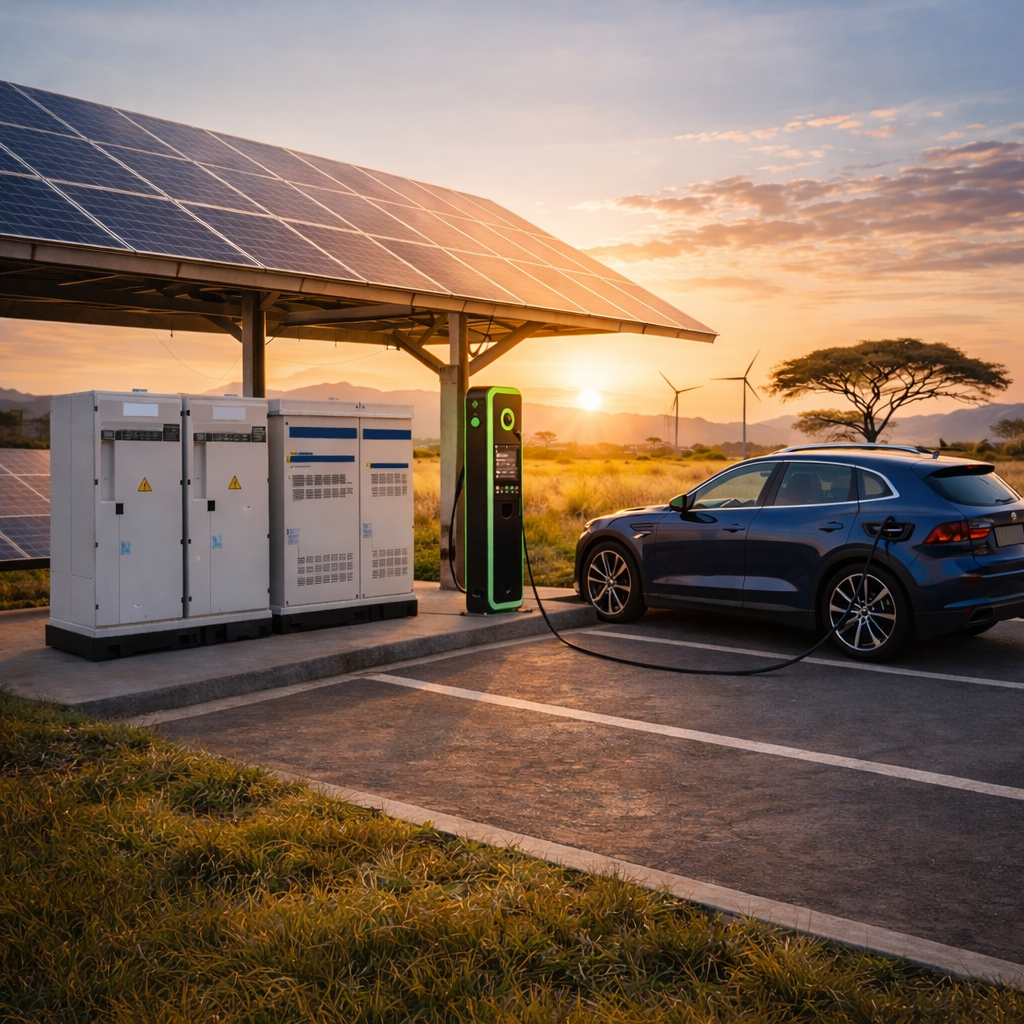
Unconstrained Charging
In many African markets, charging demand will outpace grid upgrades. This pillar looks at how storage-backed charging infrastructure and BESS enable high-power, reliable charging without waiting for grid expansion, and how Nordic technologies and financing structures can accelerate rollout for fleets and corridors.
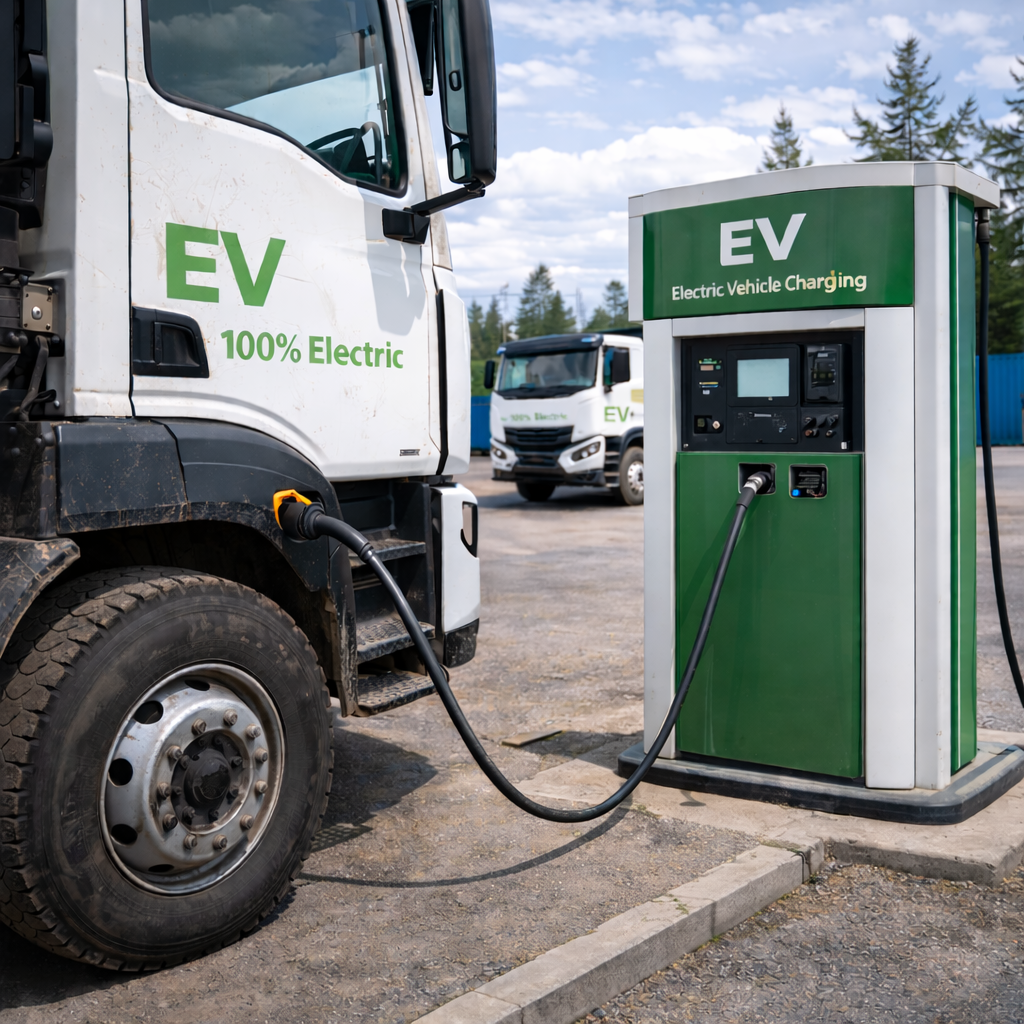
Heavy-Duty Electrification
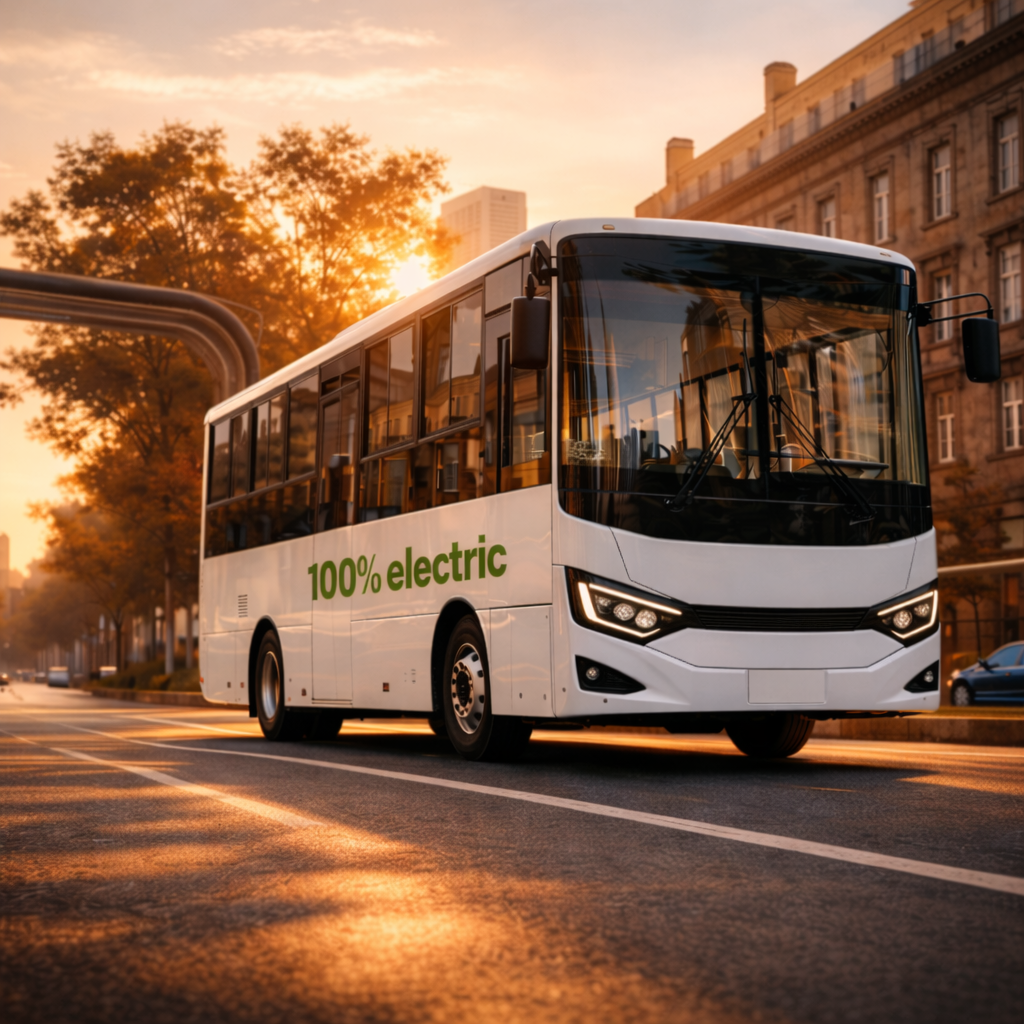
Electrifying buses, commercial fleets and transport corridors offers Africa the fastest route to scale and impact. This pillar focuses on heavy-duty deployment models, showcasing how Nordic vehicle platforms, charging solutions and operational expertise can support reliable, high-utilisation transport systems across cities and regions.
Policy Enabler

The focus is on the regulatory, public transport and market structures that shape investment decisions, highlighting how Nordic experience in regulation, public procurement and public–private partnership models can support African governments and cities in creating predictable, investable conditions for long-term electrification.
Grid Readiness
Africa’s electric mobility rollout will be limited by grid capacity unless power systems evolve in parallel. This pillar examines how grid planning, renewable integration and system resilience can enable EV deployment at scale, drawing on Nordic experience in building robust, flexible power systems suited for long-term growth.
Twin-City summit
The Nordic–Africa EV Summit 2026 will be the first high-level platform connecting the Nordic e-mobility ecosystem with the rapidly growing African electric mobility movement. This twin-city event will convene under the Nordic EV Summit in May 2026 in Oslo and under Nordic Africa EV Summit in Addis Ababa in September 2026. The summit will bring together government leaders, private sector innovators, investors, policymakers, researchers, and development partners to catalyse a shared future of sustainable and connected transportation.
The Nordic Edge - The Nordic countries Norway, Sweden, Denmark, Finland, and Iceland are global pioneers in e-mobility and renewable energy. Their leadership in electrifying transportation across sectors demonstrates how integrated policy, innovation, and partnership can accelerate climate goals aligned with the Paris Agreement.
The African E-Mobility space is on the move and this is the moment for the International Community to join in to accelerate the transition.